
Running the Prep Room: How Mentors Can Help trainees and ECTs Work Effectively with Technicians
Design & Technology Teacher
Epping St John’s School

The Initial Teacher Training Early Career Framework (ITTECF) 2024 expects new teachers to “work collaboratively with colleagues, including support staff, to ensure lessons run smoothly and safely.”
For mentors supporting trainees and early career teachers (ECTs) in design and technology (D&T), that collaboration often hinges on technician support and communication and by extension practical lessons are dependent on clear systems between teachers and technicians. Yet, these are often under strain – a reality I’ve experienced during training and into my ECT year.
Towards Operational Literacy
I’ve seen how technician capacity shapes lesson flow and safety and when this preparation or communication falters, it exposes the systems beneath the surface. Effective mentoring in practical subjects, then, goes beyond classroom routines to include operational literacy.
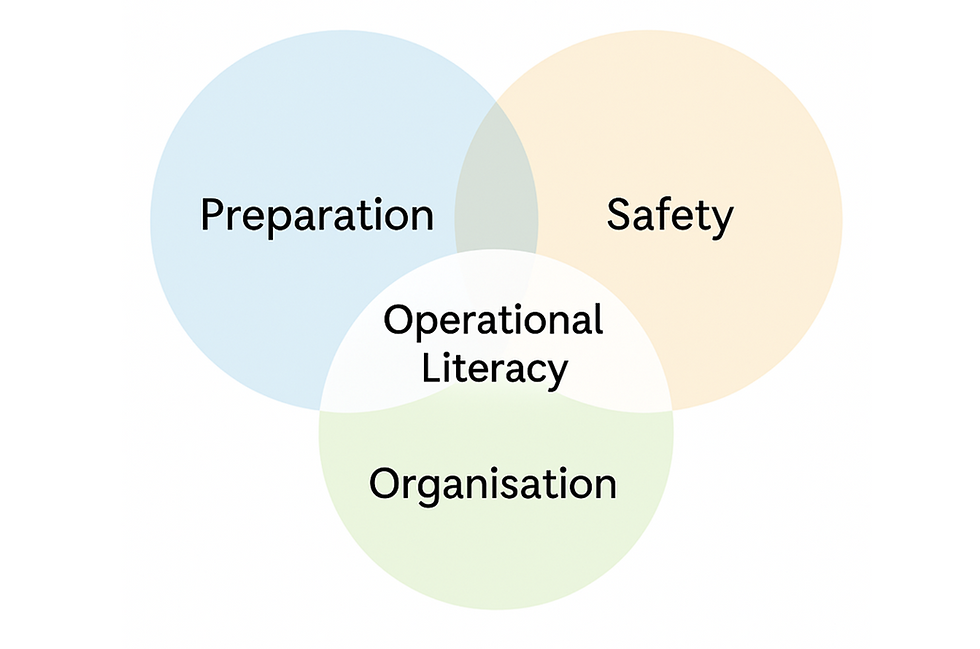
Teachers’ Standards 7 and 8 capture this overlap. While TS7 focuses on managing behaviour to ensure a safe learning environment, TS8 emphasises effective communication and professional responsibility. In practical rooms these standards too overlap: calm lessons rely on collaboration, and collaboration relies on structure.
A system first approach
It’s in this space between routine and responsibility that early career teachers find their footing. As Tom Bennett notes in Running the Room, “the first term you teach alone is when you discover which routines were yours and which belonged to someone else.” Mentors can use that insight to help trainees and ECTs identify which systems they truly understand and which they’ve simply inherited. Recognising that difference early turns compliance into ownership.
When technician support is patchy though, mentors can guide trainees and ECTs to study the system, not the person. This reframes frustration as professional inquiry. Reflection might begin with questions such as:
Which parts of preparation rely on habit rather than a visible, shared routine?
When requests go missing, what does that reveal about how information is passed on?
Are there safety checks everyone assumes are done but no one records?
If the technician or teacher were absent tomorrow, what would allow another person to step in smoothly?
These prompts help trainees and ECTs see the prep room as a designed environment. It’s one that succeeds or fails through process, not personality. Analysing systems in this way turns friction into data and builds reflective habits.
Helping trainees and ECTs bridge the technician/teacher gap
Table 1. Four Strategies – Getting day-to-day systems nailed
Strategy | Mentoring focus | Why it matters |
Clarify boundaries early | Use CLEAPSS GL115 (Technicians and Their Jobs) with departmental policy to define where teacher and technician responsibilities begin and end. Discussing this together turns guidance into practice. | Prevents blurred roles and models professional communication and accountability under Teachers’ Standard 8 (ts8). |
Establish predictable communication | Support the trainee/ECT to use one consistent system: a booking log, prep sheet, or weekly email. Then review for reliability and impact. | Builds calm through routine and reduces last-minute stress while reinforcing collaboration (ts8). |
Treat friction as data | When preparation or resource issues arise, analyse what they reveal about workflow rather than about individuals. | Encourages composure and fairness, turning small frustrations into insights for improvement, being key to behaviour management and safety (ts7). |
Protect teaching attention | Remind trainees/ECTs that focus is finite. Help them create buffers such as spare materials, pre-lesson checks, or adjusted sequencing. | Keeps attention on learning, not logistics, and protects time, calm, and energy in practical classrooms (ts7). |
These strategies reflect a wider national challenge. The NFER’s Science Technician Workforce in English Secondary Schools (2020) reported a 16 percent fall in technician numbers since 2011; UNISON (2019) found one-third believe cuts compromise safety.
Acknowledging this helps mentors, trainees and ECTs discuss workload and risk openly, focusing on realistic solutions rather than apportioning blame.
Thus, mentoring in practical subjects is about developing teachers who understand systems alongside content. Additionally, technician collaboration cannot rely on goodwill alone and must be planned, reviewed, and refined. Mentors can frame any operational problems as opportunities to think analytically, leading trainees and ECTs build not just procedural competence but also professional confidence.
The upshot: Even when resources are limited, strong communication and clear routines can turn constraint into stability. And given that calm, safe lessons are rarely accidental but designed – seeking the structure in any stretched prep room makes it the quiet foundation of success.


As a current PhD student juggling research with a part‑time job at Affordable Assignments, I really connected with this post on Running the Prep Room: How Mentors Can Help Trainees and ECTs Work Effectively with Technicians it reminded me how crucial guidance and support are when you’re trying to learn under pressure. Back in my college days, the lack of clear mentoring made even the simplest tasks feel overwhelming, and I often struggled to balance the technical expectations of my courses with the demand for quality work. Now, while assisting fellow learners with Online HND Assignment Help, I see firsthand how having someone to demystify processes not only builds confidence but also deepens understanding; that experience of support or the lack…